English| EUR
Suggested for you
More currencies
Choose a language
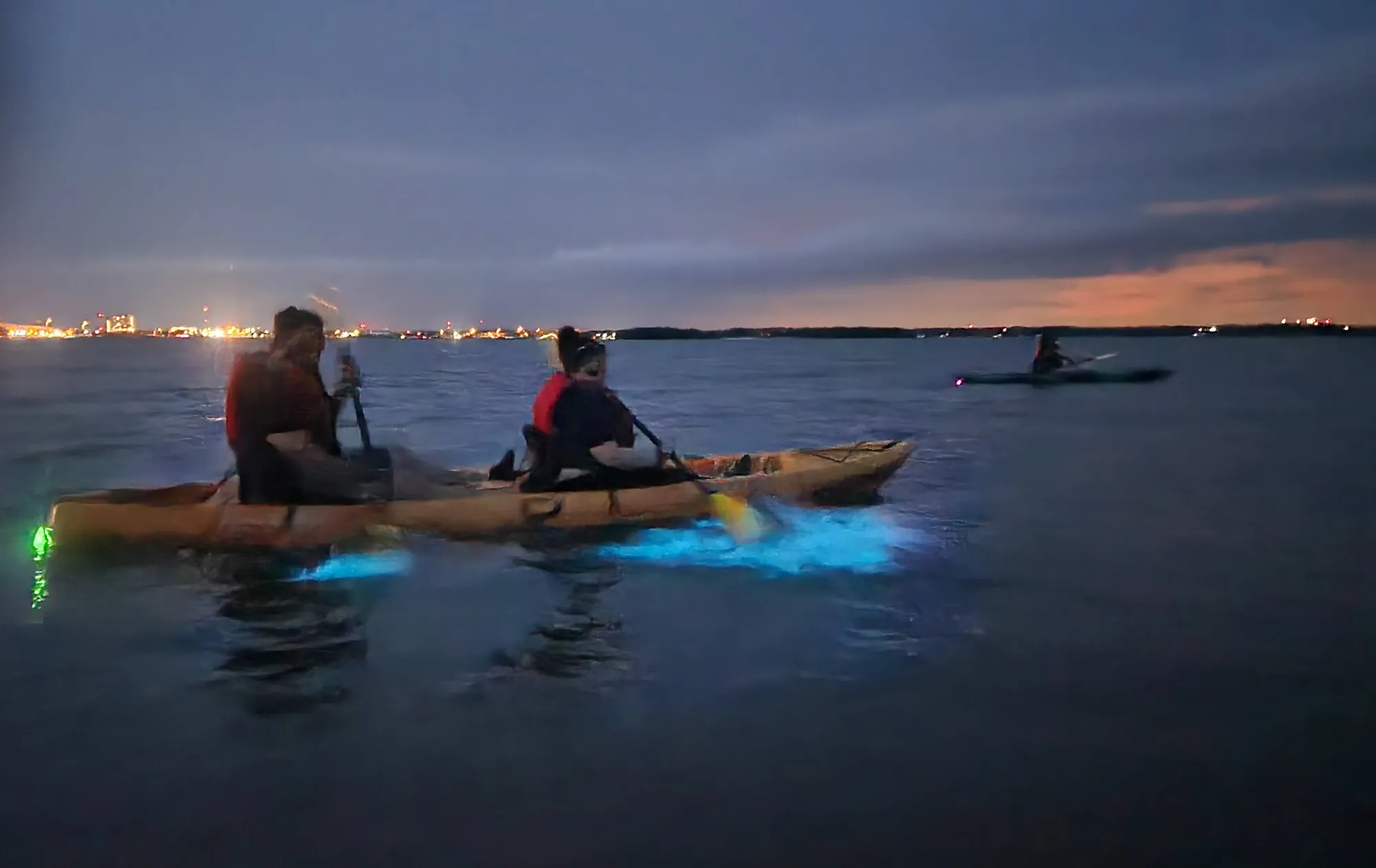
Bioluminescence visibility in Banana River depends on three converging factors: water temperature that supports dinoflagellate blooms, moon phases that allow darkness, and weather conditions that keep the water calm. This guide explains when these factors align and how to plan your paddle around them.
Quick answer
The best time for bioluminescence kayaking in Banana River spans June through September, when warm water temperatures between 75°F and 85°F trigger peak dinoflagellate populations. New moon phases—roughly five nights per month—provide the darkest skies, while launch windows after 20:00 ensure full darkness. Calm, overcast nights without rain produce the brightest displays, as wind and precipitation disrupt the organisms.
Dinoflagellates—the single-celled organisms responsible for Banana River's blue-green glow—require water temperatures above 68°F to reproduce in visible concentrations. The densest blooms occur during Florida's warmest months, typically peaking in July and August when consistent heat and calm conditions create ideal habitat. Water temperature alone does not guarantee visibility; the organisms emit light only when mechanically disturbed, and paddle strokes produce the effect only in near-total darkness. Moon phase governs ambient light more than any other variable. A full moon can wash out bioluminescence entirely, rendering even dense blooms invisible to the naked eye. New moon windows—the three nights before and after the lunar cycle's darkest point—offer the contrast necessary for the phenomenon to register. Cloud cover on these nights further reduces light pollution, intensifying the glow. Seasonal storms between June and September can temporarily scatter dinoflagellate populations, but blooms typically reconcentrate within 48 hours of calm weather returning. The Indian River Lagoon system, of which Banana River forms the northernmost segment, supports year-round dinoflagellate presence at lower densities. Spring and fall paddles occasionally yield faint glows during new moon phases, but the effect remains subtle compared to summer intensity. Winter water temperatures below 65°F suppress reproduction, and the organisms enter dormant states that produce minimal luminescence even when disturbed. Experienced paddlers time trips to coincide with both seasonal warmth and lunar darkness, understanding that either factor alone proves insufficient. Current patterns and nutrient loads also influence bloom density. Banana River's sheltered geography and limited tidal flushing create stable conditions that favor sustained populations. The waterway's connection to the Atlantic via Port Canaveral introduces periodic nutrient pulses that can trigger sudden bloom intensifications, though these events remain unpredictable and short-lived. Paddlers monitoring local water quality reports can occasionally identify windows of exceptional activity, but consistent summer new moon scheduling remains the most reliable strategy for witnessing the phenomenon at its brightest.
“Dinoflagellates emit light only when mechanically disturbed, and paddle strokes produce the effect only in near-total darkness.”
The optimal window for viewing bioluminescence in the Banana River is during the summer months, specifically when moon phases are near new moon. Arrival during the 20:00–21:00 window is essential to ensure total darkness for visibility.
Warm, 80°F to 85°F
Bioluminescence activity increases as water temperatures rise in late spring. New moon cycles offer the highest visibility.
Hot, 85°F to 90°F
This period represents the peak season for dinoflagellate activity. Nighttime darkness remains the primary factor for viewing.
Warm, 75°F to 80°F
Bioluminescence continues through early autumn before water temperatures drop. Fewer visitors are present compared to summer months.
Verdict: The best opportunity occurs between July and August during new moon phases, arriving strictly within the 20:00–21:00 window.
The launch area is open daily to facilitate access for those planning their visit to observe bioluminescence.
Access to the public launch area on the Banana River does not require an entrance fee. Costs only apply if you choose to book a private guided kayak tour.
Verdict: Public access to the river is 0 USD, while private guided tour prices vary based on the provider chosen.
The launch point for bioluminescence kayaking on the Banana River is located at 400 S Sykes Creek Parkway, Merritt Island, FL 32952. Most visitors access this area by vehicle, which provides the most direct route to the riverfront.
SR 520 to S Sykes Creek Parkway
Direct to 400 S Sykes Creek Parkway
Local trails to Sykes Creek Parkway
Plan to reach the launch site between 20:00–21:00 to ensure you are ready for your session when darkness settles. Follow signage for the river access point at the Merritt Island address provided.
Prepare these essentials before heading out to maximize your bioluminescence viewing experience.
Everything you need to know about bioluminescence kayaking best time
The bioluminescence kayaking best time typically falls between late spring and early fall when water temperatures are warmer. Darkness is essential for visibility, making clear, moonless nights the primary factor for scheduling your excursion.
A new moon phase provides the darkest conditions, which is crucial for the bioluminescence kayaking best time. High illumination from a full moon can significantly reduce the visibility of the natural glow in the water.
While the glow can occur throughout the warmer months, the peak season for a Merritt Island night paddle generally aligns with summer conditions. Warm, stable water temperatures support the organisms responsible for this evening illumination.
The best arrival window is 20:00–21:00 to ensure you are on the water as total darkness settles in. Planning your arrival during this period helps maximize your exposure to the natural light display.
Yes, children can often join a Merritt Island kayak adventure if they are comfortable on the water. It is recommended to check specific age requirements with your tour operator to ensure a safe experience for the whole family.
You should prepare for a night on the water by wearing comfortable clothing that can get wet and bringing insect repellent. Since you will be launching in darkness, using a waterproof bag for personal items is a practical choice.
There is 0 USD entrance fee for public access to the river launch area. This free public access allows visitors to reach the water for their planned excursion.
The most common mistake is failing to check local moon calendars before planning your trip. Choosing a night with too much lunar light will make it difficult to see the glowing water, even if it is otherwise the bioluminescence kayaking best time.